

Running a forced reset trigger—such as the Partisan Disruptor—fundamentally changes the cycling dynamics of your AR-15. Getting your buffer weight right is the single most critical factor in preventing bolt bounce, short-stroking, and out-of-battery light strikes when running a forced reset trigger. Because the Partisan Disruptor forces the trigger forward against your finger, the bolt carrier group (BCG) must have enough reciprocating mass to overcome that mechanical resistance. Alternatively, a specialized BCG such as the KAK Deadblow Carrier can be used, but tuning your buffer setup remains the primary, most accessible path to flawless operation.
Choosing the correct buffer weight and internal construction is essential for reliable operation with active reset devices. Standard commercial 3oz buffers lack the reciprocating mass and dead-blow effect required to drive the trigger forward, leading to severe bolt bounce, light primer strikes, and cycling malfunctions. This guide breaks down why commercial buffers fail, how internal reciprocating weights eliminate bolt bounce, and how to select the exact H2, H3, or universal buffer system for your AR-15 build.
Why Standard Commercial 3oz Buffers Fail with FRTs
Standard commercial carbine buffers weigh approximately 3.0 ounces. While a 3oz buffer works well enough for standard semi-automatic firing, it consistently fails when paired with forced reset triggers. To understand why, you have to look at the physics of active trigger reset:
Insufficient Reciprocating Mass
An active reset mechanism relies on kinetic energy from the returning bolt carrier group to drive the trigger shoe forward against constant finger pressure. A lightweight 3.0 oz buffer unlocks too fast and moves at excessive velocity, leaving the bolt carrier without enough mass to trip the reset sear reliably.
Severe Bolt Bounce
Lightweight carbine buffers cause slamming into the barrel extension at extreme speeds and the BCG immediately rebounds backward. This micro-bounce leaves the bolt carrier slightly out of battery right as the hammer falls, causing light primer strikes or dead triggers. If you want to dive deeper into trigger mechanics, read our detailed guide on Understanding Forced Reset Triggers
Reciprocating Weights vs. Solid Core Buffers: Why Construction Matters
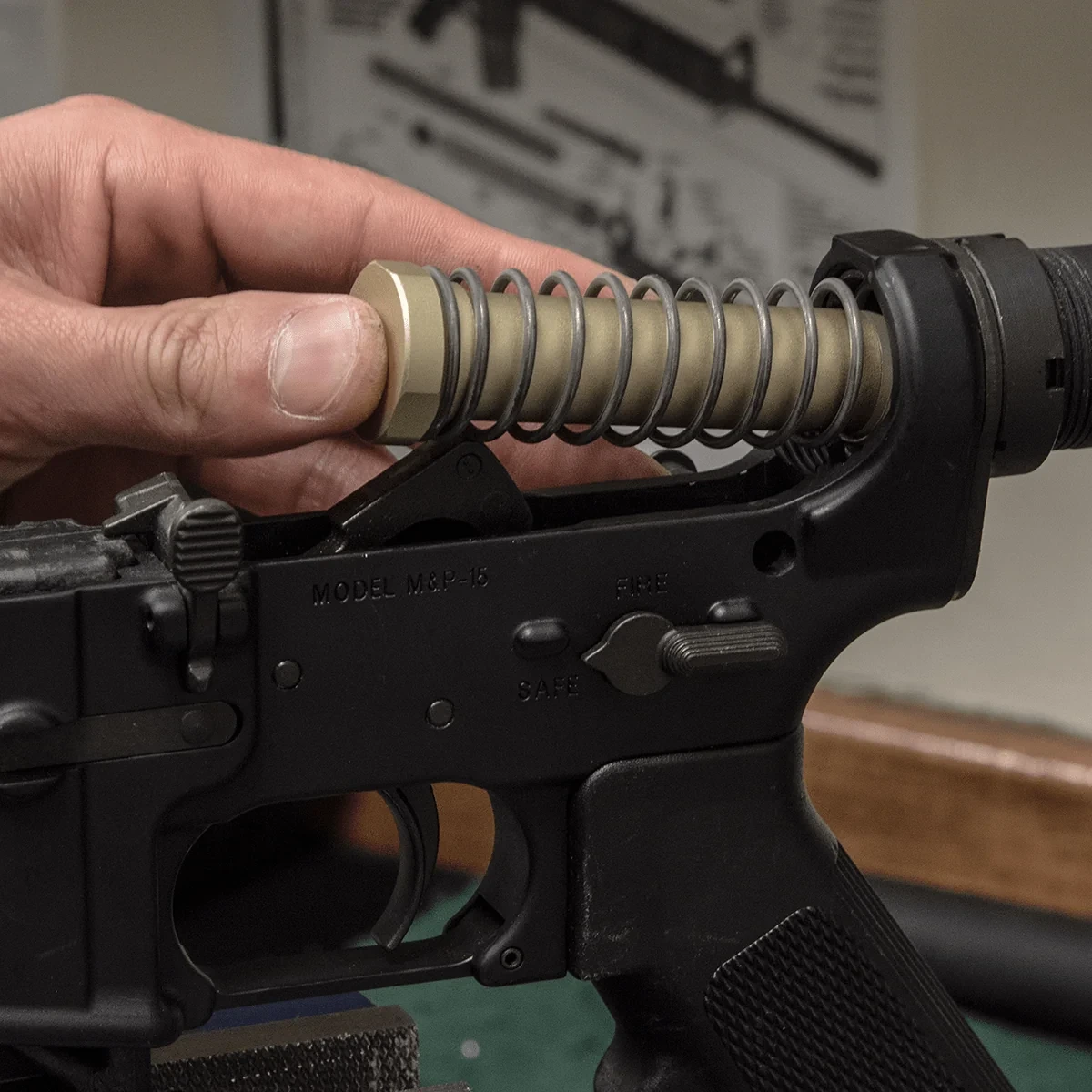
When choosing a buffer for a forced reset trigger, total overall weight is only half the equation—internal mechanical construction is equally critical. Not all H2 or H3 buffers are built the same, and using the wrong style will cause instant failure.
Reciprocating Internal Weights (How They Work)
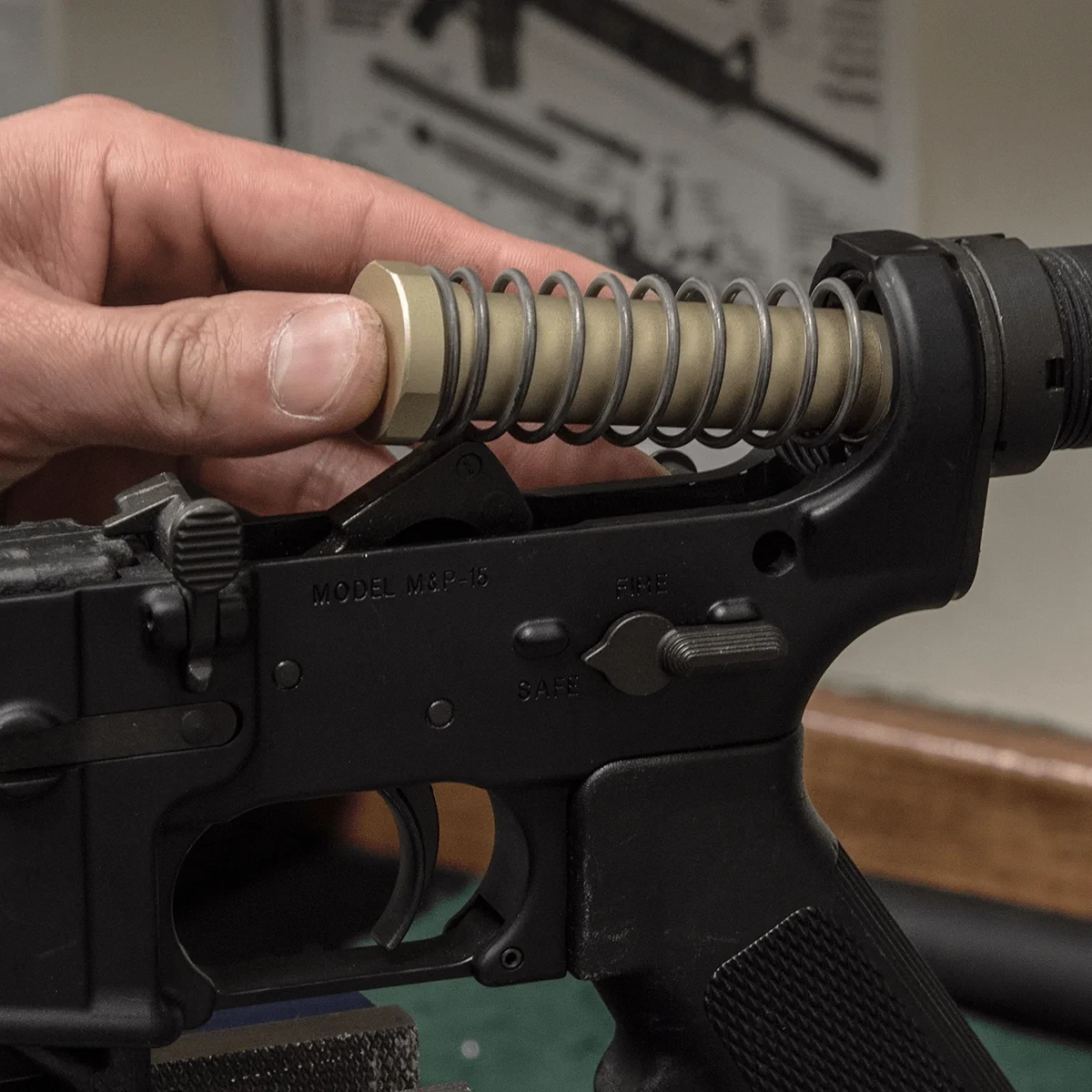
Heavy buffers contain individual sliding internal weights (typically steel and tungsten weights separated by rubber washers). When the bolt carrier group drives forward into battery, these internal weights lag slightly behind due to inertia, then strike forward a fraction of a millisecond after the buffer body stops. This sliding motion creates a true dead-blow effect that deadens recoil energy and holds the bolt carrier firmly against the barrel extension, preventing it from bouncing back.
Why Solid Core Buffers Fail
By contrast, solid core buffers—even those custom-machined out of solid steel or tungsten to reach target H2 (4.6 oz) or H3 (5.2 oz) weights—lack internal sliding weights. When a solid buffer hits the front of the extension, it acts like a hammer striking an anvil. The impact energy immediately redirects backward, creating bolt bounce. Because forced reset triggers require the bolt carrier to remain fully closed while pushing against finger pressure, solid core buffers cause persistent light strikes regardless of their advertised weight.
Buffer Usage Guide: Tuning for Your Barrel Length
To achieve optimal cyclic timing and prevent malfunctions, match your buffer mass to your rifle's barrel length and gas system pressure:
16-inch or Longer Barrels
For standard carbine or mid-length gas systems on 16"+ barrels, a Heavy AR15 H2 Buffer (4.6oz) should be used. The H2 provides enough mass to delay unlocking slightly and ensures reliable feeding without sluggish cycling.
SBRs and Pistol-Length Barrels
Shorter barrels generally run higher port pressures, resulting in violent carrier velocity. For short-barreled rifles (SBRs) and AR pistol builds (ARPs), a Heavy AR15 H3 Buffer (5.2oz) should be used to appropriately slow down the carrier and prevent bolt bounce
The Universal Solution: Odin Works HFRT Buffer
If you want to skip the trial and error of swapping individual buffers across different uppers, using the Odin Works HFRT Buffer & Spring Kit will be easiest because it is a universal solution that works with all builds. Weighing in at 6.2 oz and bundled with a proprietary flat wire spring, the HFRT is explicitly designed to self-regulate and cushion the stroke, providing the exact dead-blow effect needed for forced reset triggers regardless of your barrel length or gas system.
Upgrade Your Build with NSPEC Innovations
Whether you are building a custom short-barreled CQB setup or fine-tuning a 16-inch carbine, selecting the correct buffer system guarantees reliable results every time. Explore our complete line of forced reset triggers, buffer kits, and premium components in our NSPEC Innovations AR Parts Store or check out more expert technical guides on the NSPEC Innovations Blog