

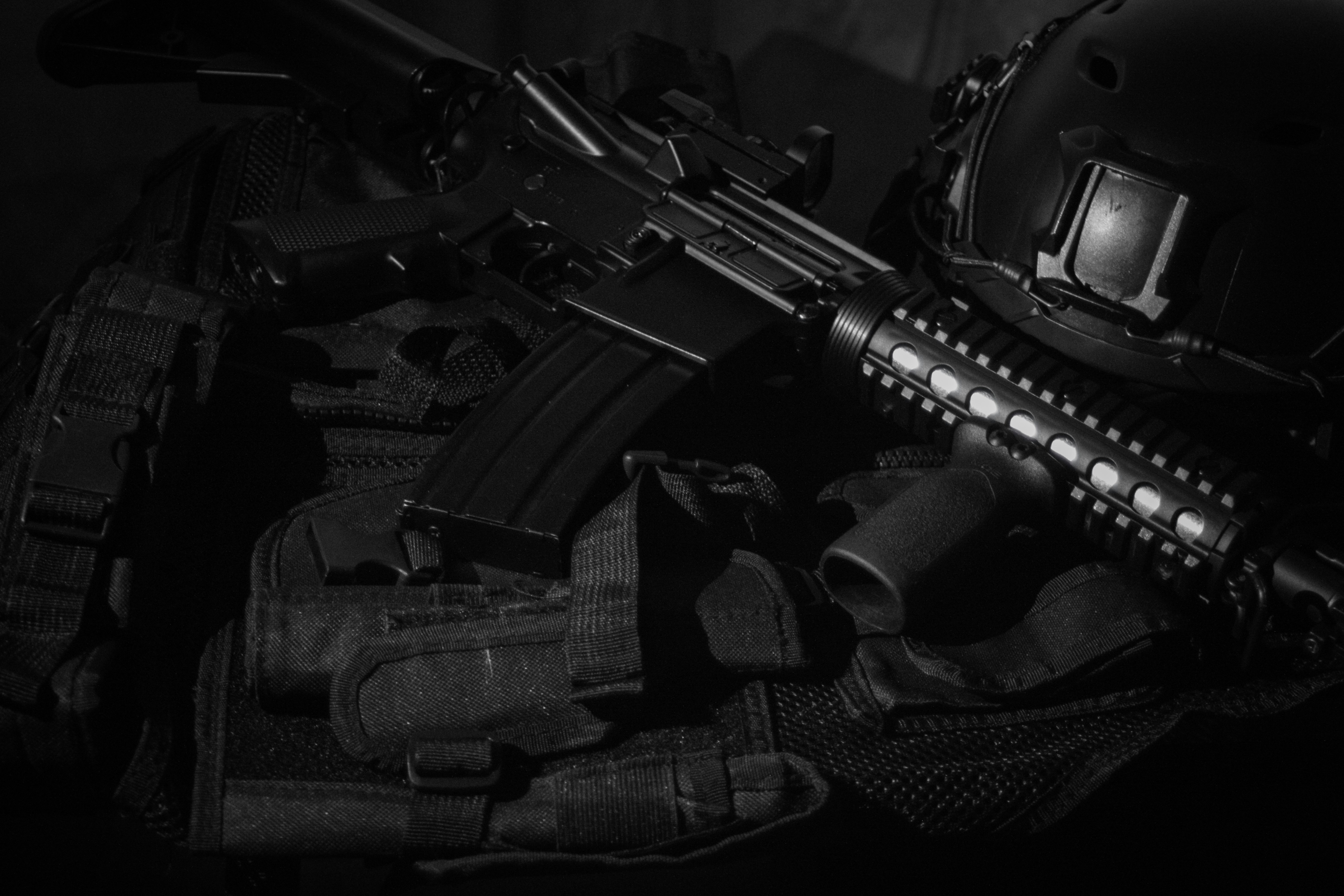
What is a Forced Reset Trigger (FRT Trigger), and Why is 2026 Uniquely Confusing for Buyers?
What an FRT Is
“FRT” means “forced reset trigger.” In plain terms, it is a trigger design intended so the firearm's cycling action mechanically forces the trigger forward to reset, instead of relying solely on the trigger spring returning the trigger and the shooter letting it move forward. The goal is a faster reset between individual trigger pulls, while the shooter is still pressing and releasing the trigger each time.
How It Differs from a Standard Trigger
On a typical semi-auto rifle, the AR-15 for example, the bolt cycles, the disconnector briefly catches the hammer, and the trigger resets when the shooter eases forward and the trigger spring returns it. With a forced reset concept, the mechanism actively drives the trigger forward as part of the cycle, which changes how the reset is felt and timed compared to a conventional semi-auto reset.
Why 2026 Feels Inconsistent
Buyers see mixed signals because online claims vary widely, and some of that uncertainty traces back to the ATF's public Safety Alert on Forced Reset Triggers dated 2021-03-26. Even when people discuss the same product type, perceptions of enforcement risk and practical outcomes are uneven, so conversations can sound contradictory.
How This FAQ Will Help
We will use consistent terminology, with “FRT” as an umbrella term for all triggers using forced reset technology of any kind. This is informational only, not legal advice; the sections ahead cover the federal framework, state risk factors, compatibility considerations, and buying practices.
Are FRT Triggers Legal Federally in 2026, and How Does the ATF Approach Affect Buyers?
Statute vs. ATF Classification vs. Enforcement
Federal legality questions around forced reset triggers in 2026 usually turn on three layers. First, the statute, 26 U.S.C. § 5845(b), defines a “machinegun” as a weapon that shoots automatically more than one shot by a single function of the trigger, and it also covers conversion parts and combinations of parts designed for that result. Second, ATF classification, meaning how the agency applies that definition to a specific device or design. Third, enforcement reality, meaning how aggressively ATF and prosecutors act on that interpretation in the field. Practical risk can exist even when sellers claim “legal,” especially if the agency has already taken a contrary view.
What the ATF Has Said (High Level)
In its March 2022 Open Letter, ATF said certain FRTs are machineguns under the NFA and GCA because they can allow multiple shots with continuous rearward pressure, which ATF ties to the “single function of the trigger” concept. The core concern is not the label “semi-auto,” but whether the mechanism can produce repeated firing without the shooter independently releasing and pulling again for each shot.
In National Association for Gun Rights (NAGR) v. Garland, a Texas federal court ruled in July 2024 that the Bureau of Alcohol, Tobacco, Firearms and Explosives (ATF) acted unlawfully by classifying Forced Reset Triggers (FRTs) as "machine guns". The court vacated the ban, declaring it exceeded the agency's authority, and barred the ATF from enforcing the classification against the plaintiffs. However, which state you reside in may be the determining factor in deciding whether to purchase an FRT or not.
Which states are highest-risk for owning or buying an FRT trigger in 2026 (and why does “risk” differ from “illegal”)?
State “risk” is not the same as “illegal.” Risk is a practical blend of how a statute is written, how broadly parts possession can be charged, how local agencies tend to enforce ambiguous items, and whether shipping, payment processors, insurers, or civil lawsuits push sellers to avoid the state even when the criminal code is not crystal clear.
- How the state defines machine gun: Some states define “machine gun” broadly enough that arguments can arise even without a named “FRT” ban. Pay attention to wording that focuses on function, conversion, or intended use.
- Parts, constructive possession clauses: States with explicit “combination of parts” and “possession or control” language tend to be of higher risk. Examples include N.Y. Penal Law § 265.00(22) (includes the frame or receiver, conversion parts, and combinations of parts from which a machine gun can be assembled if possessed or controlled), N.J. Stat. Ann. § 2C:39-1(m) (similar combination of parts and possession or control clause), and Conn. Gen. Stat. § 53-202 (parts, combination of parts, and possession or control framing).
- Rate-of-fire device bans: Separate “rate-increasing device” “multiburst trigger activator” “rapid fire device” concepts can elevate risk, even if not labeled as a machine gun. California defines “multiburst trigger activator” in Cal. Penal Code § 16930 and generally prohibits possession under § 32900. Washington and Florida have bump stock specific prohibitions and definitions, see RCW 9.41.190 with context in RCW 9.41.010, and Fla. Stat. § 790.222.
- Locality overlays: City and county ordinances, plus prosecutorial discretion, can shift outcomes, especially where state statutes are broad or novel.
- Commerce, shipping pressure Retailer policies and civil liability can effectively “ban” shipments. New York’s civil nuisance tool, N.Y. Gen. Bus. Law § 898 (enacted 2022-06-23), can increase compliance pressure, and you can review parts retailer compliance and shipping-policy examples (PSA overview) to see how restrictions are commonly published.
How to use this framework Read your state’s definitions, parts language, and any device specific bans, then check local ordinances. If a statute is ambiguous, or your state has explicit “combination of parts” or rate-increasing device language, treat that as higher practical risk.
What Platforms Support FRTs? What Should Buyers Verify Before Purchase?
Most FRT searches center on the AR-15 because its fire control group (FCG) is a modular trigger, hammer, and disconnector set retained by pins in a lower receiver. That standardized, two-pin trigger pack layout makes it easier to design around consistent pin spacing, trigger pocket dimensions, and bolt carrier interaction. It is also why most aftermarket AR triggers assume mil-spec trigger pocket geometry, a nonstandard pocket can prevent installation or reliable function. For example, the AR-15 Super Safety, will fit any AR-15 lower receiver when paired with a centering block (like in the kit offered by NSPEC). The centering block allows the super safety to be installed even in wider, M16 style lower receivers. While the super safety does replace the existing safety selector, customers who want to keep the mil-spec style selector should look into purchasing the Atrius Super Selektor FRT.
Forced Reset Triggers for the AK
"What FRT Will Fit in My AK?"
The AK trigger group, axis pins, receiver clearances, shelved or non-shelved safety lever, and carrier camming surfaces vary across models, country of origin, and year of production which can make “AK FRT” fitment highly variable and not directly interchangeable. Some AKs such as the Zastava M70 are an incredibly tight fit for all AK FRTs currently on the market. In most cases, the AK forced reset trigger can be installed without needing modifications, but it is recommended to keep a file or dremel tool on hand just in case some material needs to be removed. When looking for an AK FRT made from high quality materials, consistent heat treatment, and ease of use, look no further than the NSPEC Innovations AK FRT.
What to Know About the TX22 FRT
"Will an FRT Fit in My Taurus TX22?"
This is a question we are frequently asked. The TX22 FRT is an incredibly simple, yet ingenious design and was originally sold as the 22TY by FFT, or Freedom Fingers Triggers. Now, multiple iterations of the TX22 FRT exist such as NSPEC Innovation's TX22 FRT v3.
These handgun forced reset triggers fit the TX22 Standard version (Gen 1 & Gen 2), TX22 Competition, TX22 T.O.R.O. (Taurus Optic Ready Option), and TX22 Compact. While firing with the FRT installed the TX22 striker channel may become worn. At NSPEC Innovations, we offer a combo kit that includes both the TX22 FRT as well as an upgraded striker channel.
What is the Best FRT for the Kriss Vector?
While multiple options are available for Kriss Vector forced reset triggers, we have found that the best is the EP Armory Vector FRT as offered on the NSPEC Innovations website. The EP Armory Vector Forced Reset Trigger works with all calibers and gens of the Vector. However, replacing the gen 1 trigger pack with a gen 2 or later (often considered the worst of the Vector trigger packs) may be necessary for gen 1 vectors.
Pre-Purchase Compatibility Checklist
- Confirm the listing explicitly names your exact firearm type.
- Verify receiver trigger pocket geometry, especially on nonstandard lowers.
- Check pin size, mil-spec AR pins are typically 0.154"; some Colt lowers use 0.170" large pins that need compatible parts or adapters.
- Look for material and machining quality cues, and consult manufacturer specs.
If You're Considering an FRT Trigger for Sale in 2026, What Are the Smartest Compliant Buying Practices?
-
Vet the Seller and Listing Quality
Prefer established retailers with a real address, responsive support, and transparent product pages that show a clear model or SKU, multiple photos, and straightforward compatibility notes.
-
Read Shipping Restrictions First
Many retailers publish shipping restriction lists for trigger-activation devices and often exclude sales to jurisdictions frequently including CA, CT, DC, HI, MA, MD, NJ, NY, RI, WA, plus locality carve-outs. Treat “we will not ship there” as a risk signal, not something to ignore.
-
Watch for High-Pressure Marketing
Countdown timers, vague branding, and “limited time” urgency can be red flags. A compliant seller should explain terms calmly and consistently.
-
Use Reversible Payment Methods
Avoid these payment types:
- Wire transfers: are typically irreversible and a common scam method.
- Crypto payments: are generally irreversible and lack chargebacks.
- Gift cards: are cash-like and commonly requested by scammers.
-
Keep Purchase Records
Retain your invoice or receipt, order number, and the SKU, model, and product description as displayed at checkout.
-
Save Policy Snapshots
Save copies of return, warranty, and shipping policy pages because terms change, sometimes without notice.
-
Confirm Returns and Warranty Details
Check restocking fees, the RMA process, timelines, who pays return shipping, and whether opened items are eligible.
If anything feels unclear, pause. Ask for clarification in writing, verify and document, and do not complete a purchase until the listing, policies, and shipping rules align with your risk tolerance.
What's the Bottom Line on FRT Triggers in 2026, and What Should You Do Before Buying?
In 2026, the federal uncertainty from years past is now gone. FRT triggers do not meet the federal machinegun definition.
State and local risk varies widely, and ambiguity elevates your exposure even where statutes are not explicit. If you want a lower risk purchasing experience, consider contacting NSPEC Innovations to discuss compliance in your area and possible compliant alternatives like the Tac Con Flex 3MR if FRTs are not legal in your state. Check your state’s official state code site for the current statute text.
Before You Buy, Take These Steps:
- Review the official administrative code or state register for agency rules and updates.
- Look for state AG advisories that summarize enforcement positions or interpretations.
- Verify seller policies on legality screening, returns, and order cancellation.
NSPEC Innovations offers FRTs of the best quality for a wide range of platforms. We will be more than happy to discuss any forced reset legality, compatibility, or quality related questions to the best of our abilities.